


A Multi-Channel Strategy for Reaching Patients Across Different US Cities
For medical clinics, digital advertising is not just about getting more website visitors. The real goal is to connect with people in the local area who are looking for information, considering treatment options, or are ready to contact a clinic.
This becomes even more challenging for medical providers operating in multiple locations. A campaign that works well in one city may not perform the same way in another. Patient demand, competition, search behavior, and treatment awareness can all vary by location.
At Growth Buddys, we help medical and healthcare service providers build local lead-generation campaigns using a combination of Google Ads and Meta Ads.
Our approach focuses on generating meaningful enquiries through channels such as phone calls and lead forms, while creating campaigns tailored to specific services and clinic locations.
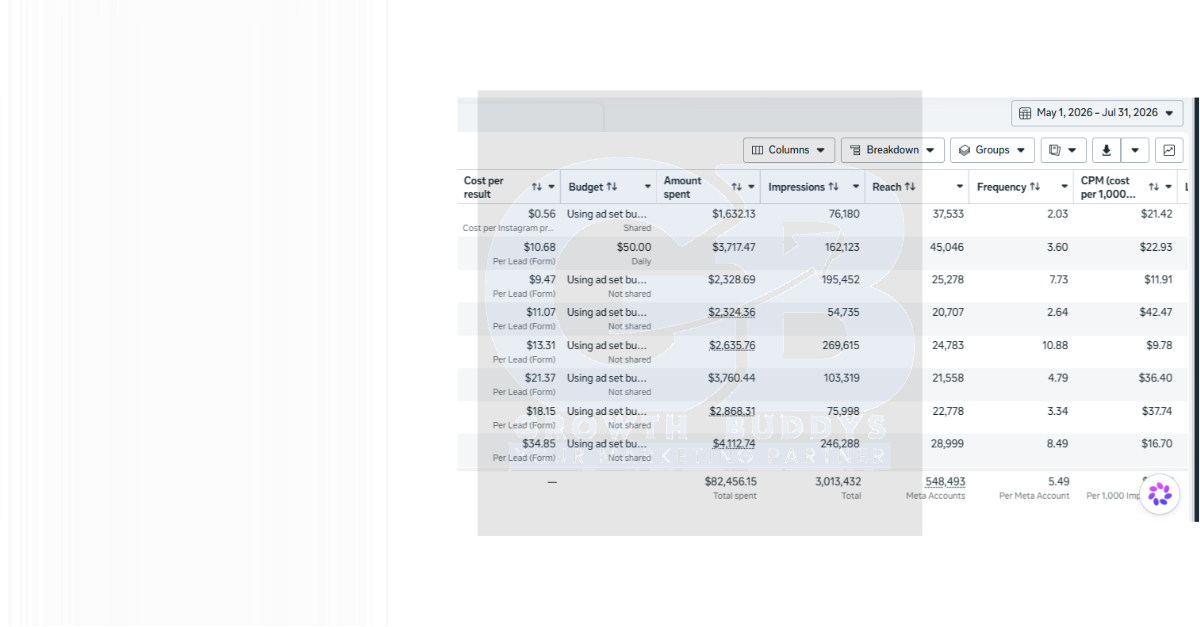
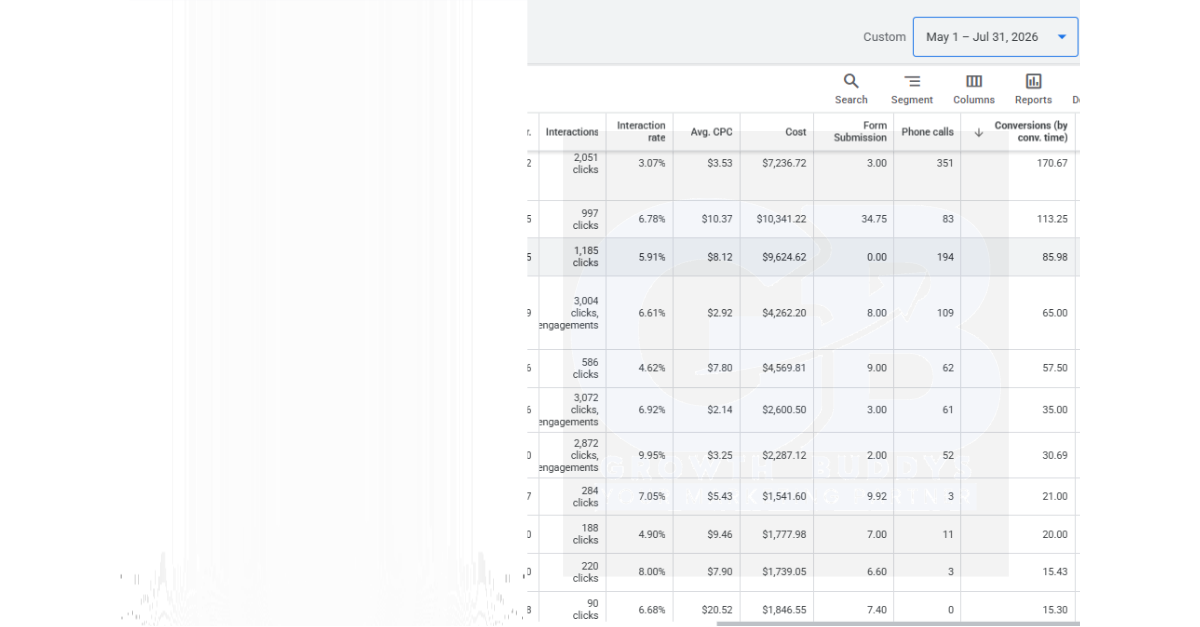
Based on recent campaigns across multiple medical service locations in the United States, our Google Ads campaigns generated 600+ tracked conversions, while the Meta campaigns shown generated 1,400+ form leads across different locations and medical services.
Here is how we approach local patient lead generation.
The Challenge: Generating Leads for Clinics in Different Cities
Marketing a single medical clinic is different from marketing a practice with multiple locations.
A generic campaign targeting a large geographic area can create several problems:
- Ads may reach people who are too far from the clinic
- Budgets may be spent on locations with lower lead potential
- Different services may be mixed into the same campaign
- It becomes difficult to identify which clinic location is generating results
- Messaging may not match the specific needs of local audiences
For a medical provider with clinics in different cities, we believe the strategy needs to be more localized.
Instead of treating every location as one market, we create campaigns around the areas, services, and lead opportunities that matter to the business.
Our campaigns have supported medical service providers across locations including Bethlehem, King of Prussia, Reading, East Stroudsburg, and surrounding areas.
Step 1: We Build Campaigns Around Local Patient Demand
The foundation of a successful local medical advertising campaign is understanding where potential patients are located.
A person searching for a treatment in Bethlehem has a different local intent from someone searching in Reading or King of Prussia. Even when the service is the same, the location matters.
That is why we structure campaigns to focus on relevant local markets.
Depending on the client’s clinic setup and goals, this can include:
- City-specific campaigns
- Location-based targeting
- Separate campaigns for individual clinic areas
- Localized keywords and search intent
- Location-specific ad messaging
- Dedicated landing pages where appropriate
This gives us better visibility into which locations are generating enquiries and where further optimization may be needed.
Step 2: We Use Google Ads to Capture High-Intent Searches
Google Ads plays an important role in our medical lead-generation strategy because it allows us to reach people who are actively searching for relevant services.
These are users who may already be looking for information about a treatment, provider, specialist, or clinic in their area.
For example, campaigns can be structured around search intent related to:
- Specific medical services
- Treatment-related searches
- Local clinic searches
- City-based service searches
- Specialist and provider searches
- “Near me” searches where appropriate
Rather than putting every service into one broad campaign, we can separate campaigns based on the client’s key services.
In the campaigns we managed, this included services and treatment areas such as:
- Vein-related treatments
- Varicose vein services
- Spider vein treatments
- Sclerotherapy-related services
- Neuropathic pain-related services
This structure helps us understand which services and search themes are contributing to lead generation.
More Than Just Clicks
For a medical clinic, a click alone does not necessarily represent a valuable business outcome.
That is why we focus on meaningful actions such as:
- Phone calls
- Form submissions
- Lead enquiries
- Other trackable conversion actions
Our Google Ads campaigns shown in the data generated more than 600 tracked conversions, including a combination of calls and form-based enquiries.
Step 3: We Use Meta Ads to Generate Additional Lead Opportunities
Not every potential patient starts their journey with a Google search.
Some people may be aware of a problem but have not yet started actively searching for a clinic or treatment. Others may engage with educational or service-focused content before deciding to submit an enquiry.
This is where Meta Ads can become an important part of the overall strategy.
Using Facebook and Instagram, we create campaigns designed to reach relevant audiences in targeted locations and encourage them to take the next step.
Depending on the campaign objective, this may involve:
- Lead generation campaigns
- Service awareness campaigns
- Local audience targeting
- Educational messaging
- Treatment-focused creatives
- Video campaigns
- Retargeting campaigns
The Meta campaigns shown in our campaign data generated 1,400+ form leads across multiple medical campaigns.
The results also demonstrate why relying on only one advertising platform can limit lead-generation opportunities.
Step 4: We Give Google and Meta Different Roles
One of the biggest advantages of using both platforms is that they can support different stages of the patient journey.
Google Ads: Capture Existing Demand
Google Ads can help us reach people who are actively searching for relevant medical services.
The user may already have a strong need and be looking for information about available providers or treatment options.
Meta Ads: Reach and Generate Interest
Meta Ads can help us reach relevant local audiences who may not be actively searching at that exact moment.
The campaigns can introduce a service, create awareness, or encourage users to submit their details to learn more.
Together, They Create More Lead Opportunities
Instead of viewing Google Ads and Meta Ads as competing platforms, we use them as part of a broader patient lead-generation strategy.
Google Ads can help capture demand. Meta Ads can help create additional demand and generate enquiries from relevant local audiences.
This multi-channel approach allows us to create multiple opportunities for potential patients to contact the clinic.
Step 5: We Create Service-Specific Campaigns
Medical practices often offer more than one service.
Sending every potential patient to the same generic campaign can make it harder to understand what is driving results.
Our approach is to organize campaigns around important services and treatment categories where possible.
For example, instead of one campaign covering all services, the structure may include separate campaigns for different treatment areas.
This can help us:
- Create more relevant ads
- Match messaging with patient intent
- Understand service-level performance
- Improve landing page relevance
- Allocate budget based on campaign performance
- Identify new opportunities for growth
The more relevant the journey is from the ad to the service information, the easier it becomes to understand how different campaign segments are performing.
Step 6: We Focus on Phone Calls and Form Leads
Medical service providers can receive enquiries in different ways.
Some potential patients prefer to call immediately. Others prefer to submit a form and wait for the clinic to contact them.
That is why our campaigns are not built around a single conversion path.
Depending on the client’s setup, we track relevant actions such as:
- Phone call enquiries
- Website form submissions
- Meta instant form leads
- Other meaningful lead actions
This gives the clinic a broader lead-generation system instead of depending on one type of enquiry.
The Google campaign data we worked with included significant numbers of both phone calls and form submissions, demonstrating the importance of offering multiple ways for potential patients to make contact.
Step 7: We Measure Performance by Location and Campaign
Running ads is only the first part of the process.
Once campaigns are live, we continuously analyze the data to understand what is working.
We look at factors such as:
- Which locations are generating the most leads
- Which services are driving enquiries
- Which campaigns are producing stronger conversion volume
- Whether leads are coming through calls or forms
- Which platforms are contributing to lead generation
- Where budgets may need to be adjusted
This is particularly important for multi-location medical providers.
A campaign performing well in one city should not automatically be treated as a blueprint for every other location.
By reviewing performance at the campaign and location level, we can make more informed optimization decisions.
Step 8: We Continuously Optimize the Campaigns
Paid advertising is not a one-time setup.
Search behavior changes. Competition changes. Lead volume changes. Different locations can also perform differently over time.
Our ongoing optimization process can include:
- Reviewing campaign performance
- Identifying stronger-performing locations
- Analyzing search terms and intent
- Improving keyword targeting
- Reviewing lead quality with the client
- Testing different ad messaging
- Optimizing Meta audiences and creatives
- Adjusting campaign structure
- Improving conversion tracking
- Scaling campaigns that show stronger potential
The objective is not simply to generate impressions or traffic.
The focus is on creating a system that gives the medical provider a clearer view of where lead opportunities are coming from and how campaigns can continue to improve.
What This Means for Medical Clinics
A local medical clinic does not always need to advertise everywhere.
It needs to reach the right people in the right locations with messaging that is relevant to the services they are looking for or interested in.
For clinics operating in multiple cities, a well-structured paid advertising strategy can help answer important questions:
- Which locations are generating the most enquiries?
- Which medical services are driving more leads?
- Are patients more likely to call or submit a form?
- Which platform is creating the strongest opportunities?
- Where should future marketing efforts be focused?
By combining Google Ads and Meta Ads, medical service providers can create multiple pathways for potential patients to discover their services and make contact.
How Growth Buddys Can Help Medical Service Providers
At Growth Buddys, we help medical and healthcare service providers build paid advertising strategies designed around their business locations, services, and lead-generation goals.
Our approach can include:
- Google Ads management
- Meta Ads management
- Local and city-specific targeting
- Multi-location campaign strategies
- Service-specific campaigns
- Lead generation campaigns
- Phone call and form conversion tracking
- Landing page recommendations
- Search term and keyword analysis
- Campaign optimization
- Performance reporting and analysis
Whether you operate one local clinic or multiple locations across different cities, the strategy should be built around how potential patients find, engage with, and contact your business.
Looking to Generate More Local Leads for Your Medical Clinic?
If your clinic is looking to generate more local enquiries through Google Ads and Meta Ads, Growth Buddys can help you build and optimize a strategy around your locations, services, and lead-generation goals.
Let’s create a smarter patient lead-generation strategy for your medical business.
Get in touch with Growth Buddys to discuss your Google Ads and Meta Ads strategy.


Leave A Comment